
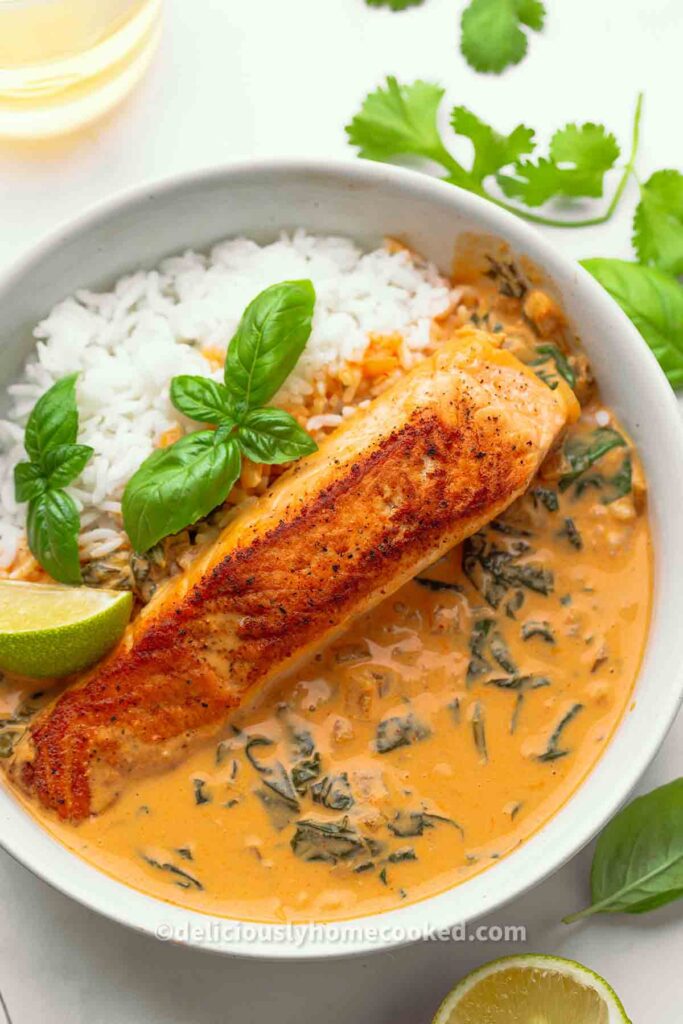
Coconut Curry Salmon is a quick, flavorful dish that brings together tender salmon fillets and a rich, creamy coconut milk curry sauce.
With a touch of red curry paste, fresh herbs, and a hint of lime, it’s a weeknight dinner that feels special without spending hours in the kitchen.

This recipe is perfect if you love a balance of savory, spicy, and slightly sweet flavors.
The curry sauce is smooth and aromatic, making it an easy way to enjoy salmon in a new and exciting way.
For more curry-inspired meals, try our chicken curry or chickpea curry. Want to stick with seafood? Our spicy salmon bowls and cajun salmon bites are two more recipes readers enjoy.


This recipe will make your week easier.
- It’s quick and easy. Ready in just 30 minutes from start to finish, making it perfect for busy weeknights.
- Flavor-packed. Creamy coconut milk combined with red curry paste, fresh herbs, and lime creates a rich, balanced sauce.
- Salmon provides protein and omega-3s, and the addition of fresh spinach boosts nutrients.
- It can easily be adjusted with different vegetables or herbs to suit your taste.


Ingredients
- Salmon fillets: Fresh or frozen, skin-on fillets stay tender and cook evenly. Skin can be removed after cooking if desired.
- Olive oil & unsalted butter: Adds richness and prevents sticking while searing salmon.
- Brown onion: Provides sweetness and depth to the curry base.
- Garlic: Adds aromatic flavor and complements the curry paste.
- Ginger: Gives warmth and enhances the spice notes in the curry.
- Thai red curry paste: The core flavor for the curry, providing heat and complexity.
- Fish sauce: Adds umami and enhances the savory flavors.
- Soy sauce: Balances the sweetness and saltiness in the sauce.
- Thai coconut milk: Creates a creamy base without overpowering the spices.
- Brown sugar: Balances the heat and acidity of the curry; can adjust to taste.
- Spinach: Adds color, nutrients, and a fresh taste.
- Fresh basil & cilantro: Provide bright herbal notes to finish the dish.
- Lime juice: Adds acidity to balance richness.
- Salt & black pepper: Essential for seasoning the salmon and sauce.
* Need to print out this recipe? You’ll find a printable recipe card at the end of this post. Enjoy!
How to make Thai coconut salmon curry
- Pat the fillets dry, then season generously with salt and black pepper.
- Cook the salmon: Heat butter and olive oil in a large skillet over medium-high heat.
- Place salmon skin-side down and cook for 3 minutes.

- Flip and cook another 3–5 minutes until just cooked through. Remove salmon from the pan and set aside.
- In the same skillet, remove excess oil if needed.
- Add chopped onion and sauté for 3 minutes until soft. Stir in garlic and ginger, cooking for 1 more minute until fragrant. Then add in red curry paste,

- Next stir in fish sauce, soy sauce, brown sugar, and coconut milk. Bring to a gentle simmer and cook 5–7 minutes until slightly thickened.
- Add spinach, basil, cilantro, and lime juice. Taste the sauce and adjust seasoning with salt, pepper, or extra lime if desired.

- Return the salmon to the pan, spoon the curry sauce over the fillets, and serve immediately.


Substitutions & Variations
- Protein swap: Replace salmon with cod, tilapia, or shrimp for a different twist.
- Vegetables: Add bell peppers, carrots, snow peas, or zucchini to the curry for extra texture.
- Herbs: Use only cilantro or Thai basil if you don’t have both.
- Spice level: Reduce or increase red curry paste depending on your preference.

What to serve with coconut curry salmon
Coconut Curry Salmon pairs beautifully with steamed jasmine or basmati rice, which soaks up the flavorful sauce.
For a low-carb option, serve it over cauliflower rice or alongside roasted vegetables.
A simple cucumber salad or lightly sautéed green beans or macho peas also complement the creamy, spiced sauce perfectly, making it a well-rounded meal.

Storing and reheating leftovers
- Refrigeration: Store leftovers in an airtight container for up to 2 days.
- Reheating: Warm gently in a skillet over medium heat to prevent the salmon from drying out. Add a splash of coconut milk if the sauce thickens too much.
- Freezing: Not recommended, as salmon texture may become dry after thawing.

Helpful Tips
- Pat salmon dry before seasoning to get a nice sear.
- Cook salmon skin-side down first; it protects the fillet and adds flavor.
- Taste the sauce before serving and adjust salt, lime, or sugar to your preference.
- Add vegetables at the last stage to keep them fresh and crisp.
FAQs
Yes, thaw the salmon before cooking for best results, then follow the recipe as written.
The salmon should flake easily with a fork and reach an internal temperature of 145°F (63°C).
Yes, simply omit the butter and use only olive oil.

Coconut Curry Salmon is a simple yet impressive dish that balances creamy, savory, and slightly sweet flavors.
With tender salmon and a vibrant curry sauce, it’s a family-friendly meal that feels special without being complicated.
Serve it with rice or vegetables, and enjoy a flavorful weeknight dinner any night of the week.
Happy cooking!
Love it? Pin it! Remember to follow @DeliciouslyHomeCooked on Pinterest for more recipes!

❤️ We’d love to hear from you!
Thank you for visiting our virtual kitchen! If you found this recipe helpful, don’t forget to share this recipe with family and friends.
Got questions? Please leave a comment.
Love this recipe? Please leave a comment.
Tried this recipe? Oh yes! Please leave a comment and a star 🌟🌟🌟🌟🌟rating too!
Looking for more tried and tested Home-cooked recipes? Sign up for our Newsletter and Follow along on Facebook, Instagram, Pinterestand Tiktok!
Love videos? Subscribe to our YouTube channel.

Thai Coconut Salmon Curry

Ingredients
- 1 pound salmon fillets (4 fillets with skin, fresh or frozen)
- 1 tablespoon olive oil
- 1 tablespoon unsalted butter
- ½ large onion (chopped)
- 2 teaspoons Garlic (minced)
- 2 teaspoons fresh ginger (minced or grated)
- 2 tablespoons Thai red curry paste
- 1 teaspoon fish sauce
- 1 tablespoon soy sauce (low sodium recommended)
- 13.5 oz unsweetened coconut milk (1 can)
- ½ teaspoon brown sugar (add more if desired)
- 3 cups fresh spinach (or more)
- 2 tablespoons fresh basil (regular or Thai)
- 2 tablespoons fresh cilantro (chopped)
- 1 teaspoon lime juice (plus extra lime wedges for serving)
- Salt and black pepper to taste
Instructions
- Season the salmon: Pat salmon fillets dry, then season generously with salt and black pepper.
- Cook the salmon: Heat butter and olive oil in a large skillet over medium-high heat. Add salmon, skin-side down, and cook for about 3 minutes. Flip and cook for another 3–5 minutes until salmon is cooked through. Remove from pan and set aside. Tip: Salmon skin can be removed after cooking if desired.
- Make the curry base: In the same skillet, remove excess oil if needed. Add chopped onion and sauté for 3 minutes until softened. Stir in garlic and ginger, cooking for 1 more minute until fragrant.
- Add sauces and coconut milk: Stir in red curry paste, fish sauce, soy sauce, brown sugar, and coconut milk. Bring to a gentle simmer over medium heat and let it cook until slightly thickened, about 5–7 minutes.
- Add greens and herbs: Stir in spinach, basil, cilantro, and lime juice. Taste the sauce and adjust seasoning with more salt, pepper, or lime if needed.
- Combine and serve: Return the salmon to the skillet, spoon the curry sauce over it, and serve immediately with rice or your favorite side.
Notes
- The sauce is flavorful enough to serve as a topping for rice.
- Salmon can be cut into chunks and cooked slightly less for a tender, juicy bite.
- Leftover curry can be stored in the fridge for up to 2 days. Reheat gently to avoid overcooking the salmon.
- Adjust sweetness by tasting the sauce before adding more sugar—it balances the heat from the curry without making it too sweet.
Nutrition